


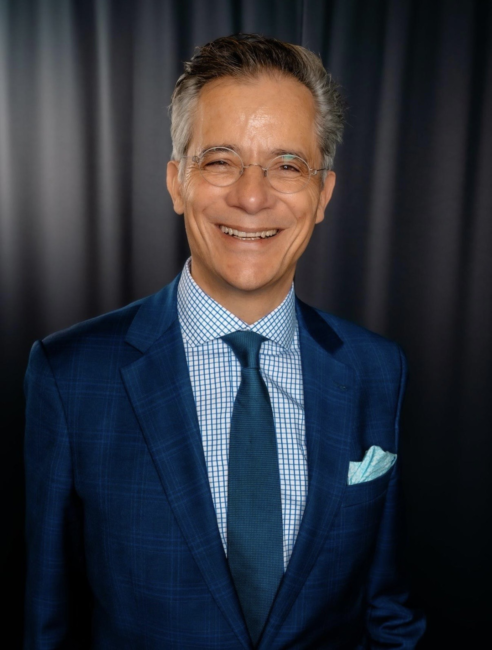


1. Can you please share with us your current position/job and profile of the organization you work for?
For the past nine years, I’ve been the managing director of Germany’s largest laundry network for the hotel industry. From fourteen laundries with a total of 2,000 employees, we supply 1,000 hotels daily with approximately 450 tons of rental linens. The two employees of Servitex GmbH are responsible for negotiating and maintaining nationwide framework agreements with national and international hotel chains. Servitex essentially acts as the key account management for the fourteen laundries, which are owned by seven shareholders, each holding a one-seventh stake in Servitex. Servitex is financed through a rebate on revenue generated by the laundries through these national framework agreements.
2. In which countries and market sectors of Professional Textile Care did you work and did you gain experiences?
After 40 years in the corporate hotel industry, I have been working in the German laundry industry for nine years, but I also have experience throughout the DACH region, as we offer our services to our customers in Austria and Switzerland through cooperation partners.
3. Could you please describe the most important characteristics and trends of the current PTC markets in terms of customer/market demand characteristics and trends?
The market is characterized by ruinous competition, rising energy costs, and the problem that laundries are unable to find enough skilled workers, managers, technicians, and truck drivers.
4. What do you see as the most important success factors for today’s PTC companies?
Reliability, customer focus, specialization, sustainability, RFID support, attractive price-performance ratio and nationwide coverage.
5. What are your organization’s objectives and when would you consider your organization to be successful?
When I took over the laundry network, it accounted for 17% of the total revenue of the laundries; this share has now risen to 23%. My next milestone is to contribute 25% of total revenue through key account business with national and international hotel groups. My goal is not just to be a sales channel, but to offer added value to the laundries.
6. What do you consider the most important future demands of clients in PTC markets?
In my opinion, sustainability, while maintaining an attractive price-performance ratio, will be the most important customer need.
7. What are key issues for the PTC companies to fulfill future demands of clients and PTC markets? Sustainability, digitalization, employer branding, flexibility.
8. How important is sustainability/circularity for your current business performance and what do you do to improve your performance as an organization?
Leading hotel groups like Accor, in particular, demand an immense level of sustainability efforts, certifications, and transparency across all relevant sustainability indicators. Furthermore, they make the setting and achievement of ambitious sustainability goals a condition for long-term partnerships.
9. Do you see sustainability as an important driver for (new) business or as a factor for saving costs?
Yes, absolutely. You won’t get any business from globally operating hotel chains like Hilton, IHG, Marriott, Accor, or Radisson if you can’t demonstrate a minimum level of sustainability through certifications. Furthermore, banks and insurance companies are already structuring their terms and conditions around sustainability, and sustainability and its convincing implementation are becoming increasingly important in employer branding.
10. Do you see technical innovation as a key factor to enhance your business performance, and what technologies are essential to provide sustainable and profitable PTC services in the future?
Yes, I can absolutely support this statement! We have been relying on increasing automation and robotics for a long time now; the next step will be humanoid robots, powered by AI, which will replace the employees we will no longer be able to find in Germany due to demographic changes. At the same time, we will be able to increasingly improve reliability, resilience, and also cost-effectiveness through robotics. It will soon be possible to seamlessly switch between one, two, or three shifts.
11. What do you see as the most important innovations of the (near) future and how do you believe these innovations will change the way the industry operates?
The most important link will be between robotics, humanoid robots, and AI-controlled processes, likely supported by RFID-chipped textiles. This will make the flow of goods within the laundry, as well as along the supply chain to and from the hotels, completely transparent.
12. According to many publications, a transformation of the PTC industry towards more customer and IT-driven processing, is seen as essential to be successful in the future. What is your policy to adapt your business/service model to changing market demands?
Every year, we organize a 24-hour retreat dedicated solely to developing ways to improve our services. Furthermore, we are the only German laundry with a scientific advisory board comprised of experts in the hotel industry, laundries, digitalization, and sustainability. This board develops both visions and concrete recommendations for our laundries.
13. We have seen an enormous increase in scale of operation of PTC companies. Do you see there will be attractive opportunities also for the more smaller companies and what is needed for small companies to be successful?
Smaller medium-sized enterprises will only survive if they are highly professionally managed, can offer a similar level of digitalization and sustainability, and are highly specialized. The only exception might be smaller, generalist businesses that serve remote rural areas.
14. How do you feel the PTC industry can take more market share in the markets of textile cleaning, compared to domestic washing?
The key concept here is: convenience is king; we need to offer simple, internet-based solutions for households. The second key will be sustainability, since we can wash four to five times more efficiently in our facilities than even the most professionally organized household.
15. What do you see as major opportunities for the professional laundry and cleaning industry for the longer term future?
In Germany, conditions will soon resemble those in the US, meaning that two-thirds of all hotel beds will be provided by large hotel chains. This presents a significant opportunity for highly professional and diversified laundries that can demonstrate nationwide coverage, excellent sustainability indicators, and certified quality, environmental, and CSR management.
16. What do you see as major threats for the PTC industry in the coming years?
The relentless growth of a few European laundry corporations like Salesianer and Elis is destroying fair competition. Furthermore, fewer and fewer businesses are able to find a sufficient number of well-trained employees, managers, technicians, and drivers to meet the growing sustainability demands of hotel chains. In my view, high energy costs and increasing water scarcity are particularly significant risk factors.
17. What would you say industry (inter-)national associations should do to support the PTC industry professionally, now and in the future?
They should be the voice of laundries in external relations and in particular carry out public relations and lobbying activities in dealing with politics, but also be a brain pool and solutions provider for their members and primarily take care of promoting young talent.
18. What is your vision on the future perspective of the industry?
Laundries, alongside manufacturers of beds, bedding, bed and bath textiles, and housekeeping service providers, are essential for fulfilling the central customer promise of every hotel: “restful sleep.” Working together with the hotel industry to address the evolving needs of travelers, reliably supporting hotels with an attractive price-performance ratio, and helping them achieve their quality and sustainability goals is a key component of my vision.
19. What is your key message to your professional PTC colleagues for now and in the future?
Trust in yourself!
— Mr. Rolf Slickers


