


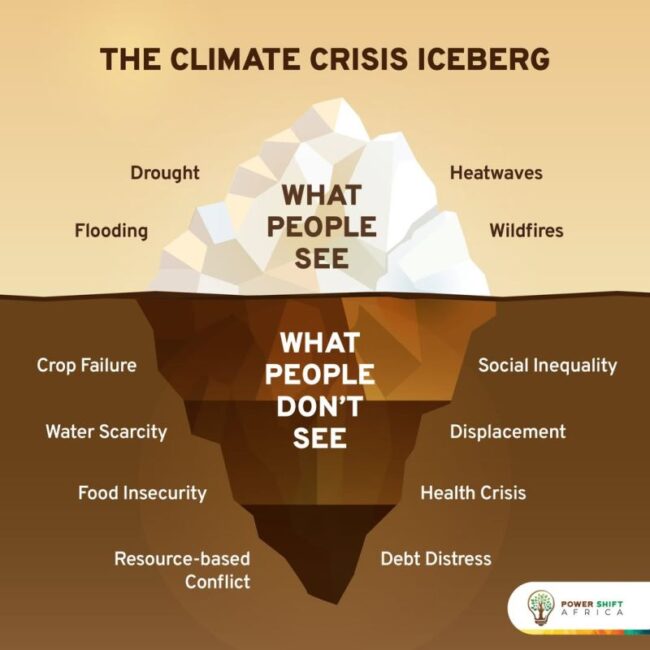


When people think about climate change, they often picture the visible symptoms: scorching heatwaves, devastating floods, prolonged droughts, and raging wildfires.
But these are only the tip of the iceberg.
Beneath the surface lies a web of interconnected consequences that rarely make headlines yet shape the lives of millions every day. Climate change is not just an environmental challenge—it is a social, economic, and humanitarian crisis unfolding in slow motion.
A failed harvest caused by drought can trigger food insecurity. Water scarcity can intensify competition over resources. Communities displaced by floods or rising seas may face unemployment, poverty, and social instability. Rising temperatures can worsen health conditions, strain healthcare systems, and reduce productivity. For vulnerable populations, these impacts often compound existing inequalities, creating a cycle that is difficult to escape.
The climate crisis does not affect everyone equally. Those who contribute the least to global emissions are frequently the most exposed to its consequences. Smallholder farmers, low-income communities, coastal populations, and future generations carry a disproportionate share of the burden.
This is why climate action must extend beyond carbon reduction. Building resilience means strengthening food systems, improving water security, protecting public health, supporting climate adaptation, and ensuring a just transition that leaves no one behind.
The iceberg analogy reminds us of a critical truth: what is visible is only a fraction of the challenge. The deeper risks—economic disruption, social inequality, displacement, and conflict—often remain hidden until they reach a tipping point.
Addressing climate change requires looking below the surface, understanding the connections, and acting on the root causes rather than the symptoms alone. Modern Professional Textile Care process technologies can provide a substantial contribution to both energy and water savings.
The climate crisis is not just about the planet we live on. It is about the stability, prosperity, and well-being of the societies that depend on it.


