


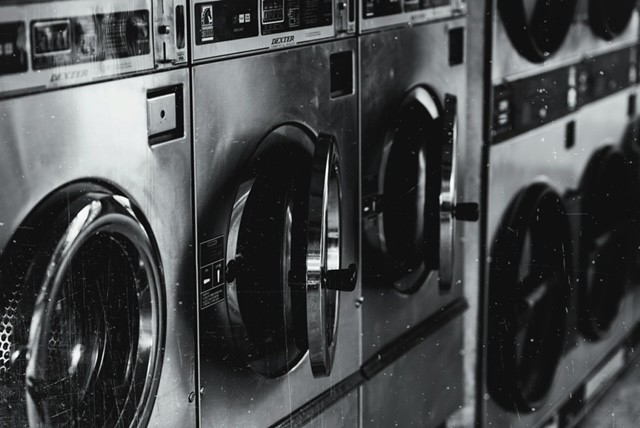


In the current laundromat industry, success requires more than just machines and today’s operators must choose business models strategically. Some opt for simple, scalable self-service. Others select service offerings like wash-dry-fold, pickup and delivery, or commercial laundry. The business models are different, but all depend on discipline, learning, and a deep understanding of what makes laundromats work.
An overview of the business models, as some launderers have experienced them:
1. The self-service model remains the most focused and scalable way to run a laundromat business. Apart from that, every location has to be clean, the machines should work, payment is simple, and pricing is competitive.
2. Wash-dry-fold (WDF) can be a strong way to add revenue to your business. WDF services can be a great service. However, as volume grows, operators may have problems with staffing, competing with self-service customers for machines during peak hours and limited storage space.
3. For some launderers, the next evolution of Wash-Dry-Fold is Pickup and Delivery. This model offers the most potential scale, but also high operational risk. Delivery requires infrastructure, scheduling tools, service windows, CRM follow-up and vehicle management.
4. Commercial laundry could realize quick growth, but has its own challenges. For instance, it requires the use of clear SOPs and custom-labelled bags and when it comes to pickup and delivery, commercial laundry is a logistics operation.
All these models require a flexible tech environment that enables customer communication, invoicing, reporting, damage and stain tracking to support growth. But, communication is crucial. As one launderer stated: “If you’re doing everything right and nobody knows it, you’re doing it wrong.”


