




PUSHING FOR EVOLUTION IN THE LAUNDRY & DRY CLEANING INDUSTRY
Background
The interview with Leon Wennekes delves into the current state and future prospects of the professional textile care (PTC) industry. Wennekes who has been active in the sector for 16 years, brings a wealth of experience and insight into how the industry is evolving and what strategies could drive its future success.
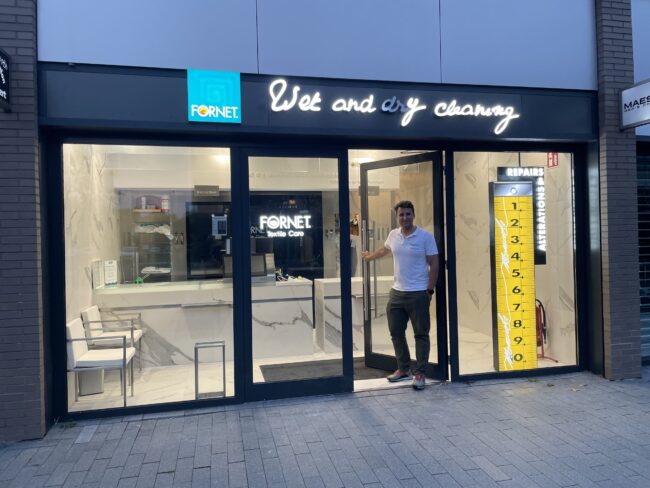
Léon Wennekes: “I entered the family business after graduating with a degree in Business Administration at Radboud University in Nijmegen. My bachelor and master thesis focused on the textile care industry and working for the trade associations gave me a solid foundation in the field. During my sabbatical I biked to Santiago in Spain and realized I could leverage the knowledge I had accumulated working for CINET and the Dutch textile care associations. This notion led me to establish a partnership with Fornet and start a flagship store in Amsterdam. Fornet is a successful laundry and dry-cleaning chainstore concept from China and together we aim to explore internationalization of the brand. In short, I’ve become deeply involved in the industry and recently was asked to become an Advisory Board Member of CINET.”

Leon Wennekes with electric bike for delivery of the cleaned laundry.
Industry in Transformation
Léon: “There’s definitely a lot happening in our industry, but it’s still rooted in old patterns. For instance, in the Netherlands, dry cleaners only serve about 20% of the population. At Fornet, our goal is to expand this by offering a comprehensive service for the entire wardrobe, not just delicate items. We aim to capture a larger market by providing sustainable, high-quality solutions that fit in modern times. Globally, we see different focuses. In Europe, we see a fragmented market with small, family-run “Mom & Pop” shops, which aren’t typically at the forefront of innovation. A good opportunity for Fornet to develop. In the US, there’s a trend going where especially old laundromats are revitalizing into full service laundry centers with wash & fold services leading the growth. This is attracting new customers and boosting demand for textile care. In Asia, the market is embracing new services like sneaker cleaning. It is surprising this service hasn’t caught on in Europe sooner. After all we clean clothes so why wouldn’t we clean sneakers? This could open up a significant new market segment.”
Disruption vs Evolution
Léon: “In contrast to most startups in the laundry space we like to position Fornet as a brand that pushes evolution in the industry rather than trying to aim for disruption”. Traditional dry cleaners have focused on delicate clothes for decades, but these represent only 5-10% of the wardrobe of our customers. So to find growth you need to develop new services. Traditional cleaning shops are losing some 5% of their customer base per year due to ageing while younger people have trouble to find their way to the dry cleaners. Yet many shop owners remain quite passive. On the other hand we’re seeing many start-ups enter the market over these last year’s aiming for disruption, but most disappear again after a short period of time, because they underestimate the complexity of the laundry process. Textile care is much more than the simple white & coloured washing process we apply at home; it’s about mastering quality, service, convenience, speed, and sustainability for any type of textile fibre. Customers expect the highest care standards for their garments and it requires hard work to get the job done. It’s good see that there are several brands are showcasing this can be done. It’s very good to see multinationals like Henkel, Unilever and P&G develop new textile care concepts as a service. These trusted brands can help to change the hearts and minds of our potential customers and convince them to try and outsource (some) of their laundry chores.
Strategic Growth
Léon: “This year’s Growth Hackers Award is focused on recognizing companies that are expanding the professional textile cleaning market, particularly by capturing marketshare from the domestic laundry market, which represents some 96% of all the kilo’s that are washed in Western Europe. Even if we manage to capture 1% marketshare from this market it will result in significant revenue growth for the professional textile care sector. We’re striving to attract ambitious companies, and the winning company will take home an investment prize of €20,000. The idea is to inspire more innovation and encourage businesses to think creatively about how they can grow the market.”

Leon Wennekes with electric bike for delivery the cleaned laundry.
International Cooperation….
Léon: “Although different regions and continents have different focus points, the world is ‘hyper connected’ and new ideas and technologies are spreading fast. CINET is developing a global platform where knowledge can be exchanged and where people can connect and collaborate – create a ‘Laundry Family’. When we work together as an industry, we can grow faster and have a bigger influence. I believe it can be a valuable way to connect with fellow entrepreneurs and enable us to build globally recognized brands like McDonalds and Starbucks. As such as Fornet we look forward to keep collaborating closely with CINET and its network of innovative laundry players.”
Attracting the Younger Generation
Léon: “A significant part of today’s challenges involves making the textile cleaning industry more attractive to younger generations. At Fornet, we’ve made it our mission to give garments a longer life and modernize the traditional laundry and dry-cleaning industry. We’ve succeeded in attracting younger generations by presenting ourselves as a mission-driven company. We offer flexible working hours, career development opportunities, and on-the-job training. A specific challenge in Amsterdam is that some areas require Dutch-speaking team members, which limits our pool of applicants, but by building a brand step by step we believe it can be done.”
Improving the Industry’s Image
Léon: It’s true – the industry does have a “dull and dusty” image. Thats because most people only see old fashioned cleaning shops in the city streets and not the advanced players which are mostly located on industrial areas out of side from the public. But I believe that can change if we show people how important our work is. For instance, we play a vital role in hygiene and sustainability, which are crucial in today’s world. We also need to promote the innovative aspects of our sector and make employees proud of their work. We’ve had success with circular textiles initiatives, which is appreciated by fashion brands, governments and consumers in general. Large laundries also sponsor activities, which helps raise awareness. In the end, it’s about getting our local communities to notice us and understand the value we bring to society.”
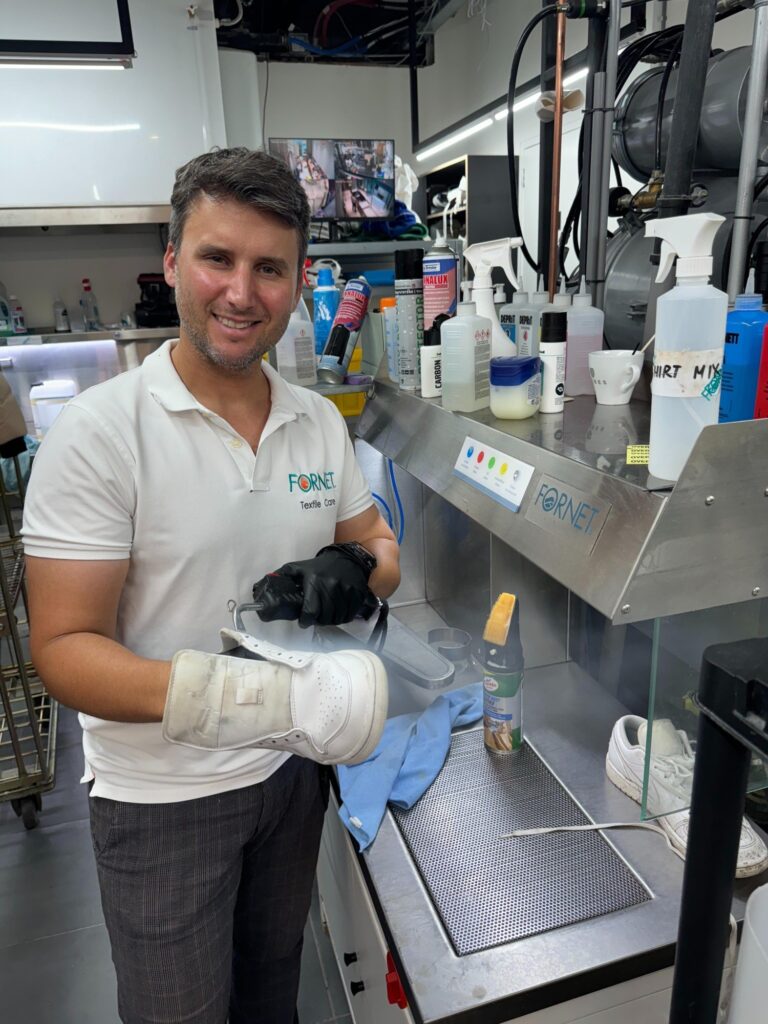
Leon Wennekes, specialized sneaker cleaning.


