


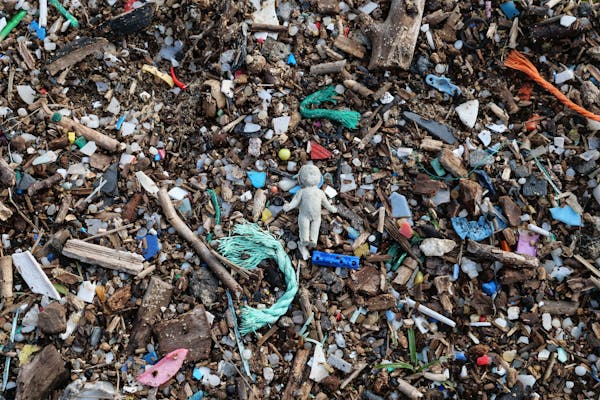


The awareness of ‘plastic soup’ being created worldwide by the breakdown of plastic over the land surface and in every part of the Earth’s oceans has increased during the past years. Despite the potential dangers, national legislations on every continent have been irresponsibly slow in prioritising technical R&D to find a solution. The result is continuously increasing plastic microparticle pollution in a once clean international resource – the seas of the world.
Research by leading universities and commercial companies around the world show that microplastics particles are increasingly being found over every land mass – including the summit of Everest – and down to the deepest parts in oceans. The particles have also been found in plastic water bottles, on food in plastic wrapping and in human lungs and brain tissue. The effect on these organs is still not conclusive, but it would be both naïve and irresponsible to think that the effect throughout the human body is non-destructive.
Although zero discharge of micro-plastic particles into our oceans might be unrealistic at short notice, some results are being achieved. The laundry industry can play a vital role here, since several hundred thousand of microscopic polyester fibre fragments are discarded from every wash process – both in commercial and domestic washes. In France for instance, every washing machine sold for domestic or industrial washing is to be fitted with a drain filter capable of removing the bulk of the micro-particles. Maybe a drop on a hot stone, but it seems a promising step forward.


