




1. Can you please share with us your current position/job and profile of the organization you work for?
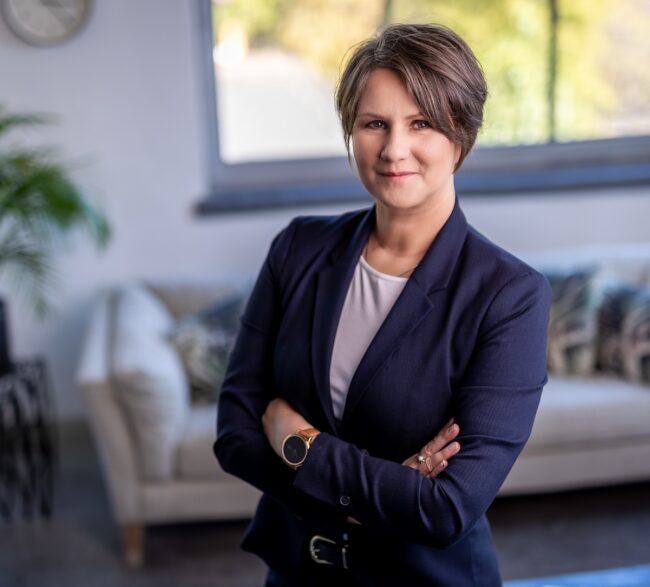
Owner / Managing Director of DS Wash Laundry in Hungary. DS Wash is a wet-cleaning (AquaTouch) based professional cleaner, with full gardrobe management offer. Online order process and home delivery services ensure customer convenience, while DS Wash also offers rental textile services as well, mainly for Airbnb owners.
2. In which countries and market sectors of Professional Textile Care did you work and did you gained experiences?
After over 10+ years in managing industrial and OPL laundries in the hospitality and RTC sector, I opened the first AquaTouch salon in Hungary 3 years ago. Introducing a new-to-the-market innovative service with unmatched convenience offering goes way beyond personal interest. It serves as the elevation of the whole industry in the Hungarian market. My role in this is also strengthened by being a trainer to the industry, active member of national associations, or representative of the country on international level.
3. Could you please describe the most important characteristics and trends of the current PTC markets in terms of customer/market demand characteristics and trends?
In Hungary the general public consumption is lower than the EU average, in the years after Covid an inflation up to 30-40% took a toll on the available budget of the middle and lower class population. In Hungary, over 104% of the households have washing machines, meaning there is still a strong focus on traditional way of domestic washing. Items outsourced to professional cleaners are mainly large items, delicate and pricey items, or heavily stained items. Convenience is less of an influencing factor yet, most importantly customers are still very price sensitive. Typically, in Hungary the retail cleaners operate PERC machine (over 90%), alternative solvents and wet cleaning is still not yet wide-spread. DS Wash is the first and only company offering 100% online order and payment system, together with subscriptions and wallet functions. Retail Cleaning shops are typically family-owned businesses, with lack in generational change. Most serious issue is the lack of skilled workforce and low buying power of the population.
Traditional retail cleaning services depend largely on the B2B sector as well: companies using retail cleaning services for workwear, small batch of flat linen like table clothes, formwear and guest clothes cleaning.
Large scale textile services is rare in Hungary. Only 1-5 sites’ capacity reaches or exceeds 10 tons per day. Majority of laundries operating in Hungary are OPL laundries with capacity between 4-8 tons per day. Also, it is typical that the demand is focused in Budapest, the capital, while OPL laundries are scattered around the country and travel to customers up to 100-150 km is usual. OPLs operate on washer extractors and very limited process automation. Current focus is on applying state of the art ironing technology with automated feeding and folding. Also, the implementation of ERP systems / laundry management software is a preferred step of innovation. Hospitality sector rental textile model is as low as 20-35%, therefore the use of RFID is also limited.
Health care sector and hygienic cleaning is a very regulated market and dominated by only a few large companies. However, this gives these very few companies to achieve a size of operation, where automation is possible and implemented. Here the use of RFID technology, automation at large scale is widespread.
4. What do you see as the most important success factors for todays PTC companies?
Only those companies who have skilled and motivated workforce can provide a stable quality that is required by the clients. Therefore internal trainings, organization development, modern work environment together with motivation is a decisive success factor. This also includes high-level customer management skills, including all level of communication, from automated delivery note systems to call centers, or even the proper education of drivers.
Only a reliable quality and partnership mindset can result in long term contracts.
5. What are your organization objectives and when would you consider your organization to be successful?
DS Wash aims to make outsourcing of household laundry popular and available to everyone. I would consider DS Wash successful if a salon or pick-up point would be readily available for every single household in Hungary. Also, if the general public knowledge was shifted towards more conscious laundry habits, starting from buying less but more durable items that can be professionally cleaned, up to using professional cleaners that provide their service integrated into daily life.
6. What do you consider the most important future demands of clients in PTC markets?
Real partnership will be the cornerstone of business relationships for both corporate or private customers. Service providers shall have a deep understanding of their customers’ pains and requirements. Which again, is only possible once a true dialog is built with the customers. It will not be enough to communicate advantages of our services in monologues, but events and knowledge sharing in new forms is needed to build trust and elevate the common understanding of textile management. As I always say, stain treatment begins when the cleaning lady enters the hotel room, or when the customer decides to trust professionals more than google-searched DIY hacks. Also, services provided should flawlessly integrate in our customers’ daily routine and lifestyle, should be very quick, reliable and for an acceptable price level.
7. What are key issues for the PTC companies to fulfill future demands of clients and PTC markets?
One of the major challenges on the PTC market is the lack of skilled workforce and the limits of existing infrastructure, like enough water, sewage, electricity or gas supply to the evergrowing plants. Uncertainty of supply safety due to geopolitical situations and the disruptions in infrastructure systems have also a major effect.
In Hungary, one of the most limiting factor is the lack of scale. Supply market is too fragmented and without proper scale of operation, automatization opportunities are also limited. This in turn would result in price competitions that do lot of damage on the market, further eroding opportunities for automatization.
In the retail cleaning segment, the decreasing quality of mass-produced clothing and missing or incorrect labeling create a high risk and result in less customer confidence. This again is a problem that needs to be solved on a global level, where international organizations and incentives play a growing role.
8. How important is sustainability / circularity for your current business performance and what do you do to improve your performance as an organization?
At DS Wash sustainability is at our core: technology full wet-cleaning, no plastic packaging / focus on reusable bags, full electric fleet for delivery, paperless operation. Also, we focus on strategic partnerships with other sustainable initiatives, second hand and re-cycling clothing.
9. Do you see sustainability as an important driver for (new) business or as a factor for saving costs?
Sustainability is a long-term game with no immediate results. Cost saving is not yet meaningful (eg. biodegradable plastic comes still at higher price), therefore sustainability is not the main driving force of innovation. However, we consider ourselves accountable and reliable business and we simply cannot think for one single minute that we would not strive to achieve higher level of sustainability. Even if customers in Hungary yet lack seeing it as a desirable minimum, we believe this is the only way forward and that it will pay off on the long term.
10. Do you see technical innovation as a key factor to enhance your business performance, and what technologies are essential to provide sustainable and profitable PTC services in the future?
Yes, I believe innovation is a key factor in enhancing our business. Every year, every month, we introduce even a little innovation. Sometimes it is coming from “above”, as the implementation of a new technology, but also, innovation can come from workers, ideas that make their work easier and raise quality. Based on this, I believe a communication and cooperation with internal and external stakeholders is the basis for innovation.
11. What do you see as the most important innovations of the (near) future and how do you believe these innovations will change the way the industry operates?
AI will be certainly a part of it – back office processes speed up, more reliable data, easier analysis and controlling will speed up the processes, ensure consistent quality.
AI being helpful in marketing also has the advantage of educating the customers, set realistic goals and support open and honest communication, fostering partnerships.
The industry should be more publicly known in the future, attractive to young professionals and appreciated by customers.
12. According to many publications, a transformation of the PTC industry towards more customer and IT driven processing, is seen as essential to be successful in the future. What is your policy to adapt your business/service model to changing market demands?
DS Wash was founded 3-years ago, therefore for us it is not a transformation or change, it is the very basic principle our operation was built on: all processes backed up with IT solutions, including online ordering platform, or subscription models. Our main focus is to keep the client happy: education via social channels, customer management training for employees, quality management processes in place.
13. We have seen an enormous increase in scale of operation of PTC companies. Do you see there will be attractive opportunities also for the more smaller companies and what is needed for small companies to be successful?
I think scaling an operation, in any kind of industry, is a non-avoidable option. However, as certain technology requires certain client size, there is always an optimum one single plant can deliver. As this optimum changes (with increased scale of operation) so thus the clientele change. There will always be the need for smaller-medium-larger operation as the clients will not scale the same way. Rental models can be a way forward – providing scale of operation while at the same time keeping smaller clients too. Also, applying process automatization at smaller scale can be a unique advantage for smaller laundries, eg. in the area of internal logistics and goods movement, automated sorting, etc. As mentioned earlier, the availability and reliability of infrastructure and supply can become a serios limit in scaling up operations. In Hungary, one major limit on scaling is the small size of the whole country. Here smaller companies to be successful need to find the process points where homogenous services can be more automated, even at smaller scale.
14. How do you feel the PTC industry can take more market share in the markets of textile cleaning, compared to domestic washing?
When we talk about domestic washing versus professional services, we talk about educating a market on large scale and forming strategic partnerships including all players from textile manufacturing, through garment producer and cleaning industry, up to recycling facilities. This can not be achieved by individual companies, but through international organizations and co-operations only. There is a lot of myth and misunderstanding as of what is a professional textile cleaning and why is it needed. The dominance of household washing machine manufacturers and the huge market of domestic washing detergents did educate the public for decades. This is a challenge only together as industry we can takle – but on the other hand, as low as 1% change in the domestic households would mean an incredible high achievement.
15. What do you see as major opportunities for the professional laundry and cleaning industry for the longer term future?
Laundry is a constant need – but the professional cleaning needs to mirror changes in customer behaviour, and become an integrated part of buying decisions. My dream is to have a customer conciosness at the buying decision: if I can not clean it, I do not buy it.
16. What do you see as major threats for the PTC industry in the coming years?
Despite all slow-fashion efforts, the consumption and garment production increases at a much larger speed than ever before. If a garment will cost less than its cleaning, demand will naturally drop. This combined with high-priced items offering low quality is bound to decrease customers’ trust towards outsourced professional cleaners.
In the textile services market the lack of skilled workforce and limited or unstable infrastructure systems cap growths of mega-plants. If large scale operations become good in serving small -size customers, OPLs and smaller laundries will not be able to keep up competition, with their higher operating costs.
17. What would you say industry (inter-)national associations should do to support the PTC industry professionally, now and in the future?
There are several aspects where international organizations can steer the development of our industry. Examples are strategic partnerships along the supply chain, public education in social media, fostering of vocational training systems, or support of research based facts on new technologies. In general, access to market knowledge based on data and surveys will be a key factor that can support even smaller players to adhere to international standards.
18. What is your vision on the future perspective of the industry?
The PTC industry is heavily dependent and built on technology. On the one hand, scale of automation and AI give the industry fast growing opportunities but we must not forget that this is a service, where customers’ needs must be precisely met. A better insight and vivid dialogues with our customers, strategic and long-term partnerships will be the cornerstone of good quality service. To ensure next generations are involved, our industry needs to address gen z now. Both as customer, and as skilled labor.
But, together with the increase of textile manufacturing, the need in one way or other of cleaning them will always be present and dare I say increasing. Apart from the effort to solve it with less and optimal usage of scarce resources, the significance of professional laundries will be constant, such is the local management of cleaning services is to expect.
19. What is your key-message to your professional PTC colleagues for now and in the future?
Focus on happy customers. It might seem easy or even shallow, but it is truely the hardest of them all – innovation, sustainability and quality are only good if they serve one need: that of the customer. Gabrielle Deme


