


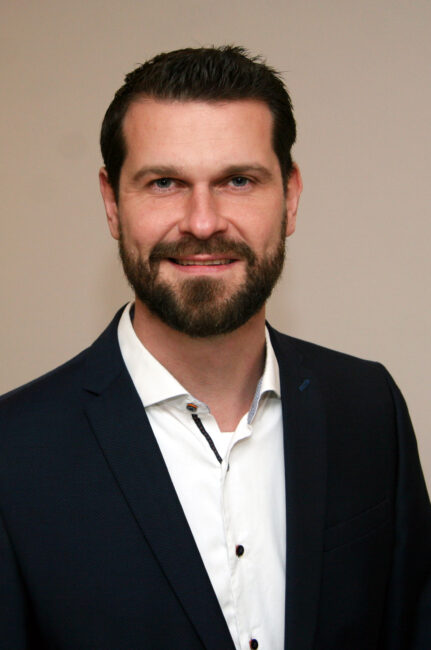


Mr. Christoph Richter is the Managing Director of Kreussler Textile Care. Manufacturer of laundry- & dry-cleaning detergents, dosing-, energy- & water-saving solutions, service for the professional laundry industry
In which countries and market sectors of Professional Textile Care did you work and did you gained experiences?
- Worked in Germany, Sweden, Italy
- Experienced gained in Europe, USA, APAC incl. China, India, partially LatAm, AUS/NZ
Could you please describe the most important characteristics and trends of the current PTC markets in terms of customer/market demand characteristics and trends?
- PTC:
- general global decline of dry-cleaning industry due to change of wearing habits (less formal), labor shortages (no successors in mature markets), relatively high investment costs for new starters
- Consolidation in mature markets, less individual operations but total “laundry pile” is shrinking as well
What do you see as the most important success factors for todays PTC companies?
- Businesses are successful with a clear USP, a good service offering, and digital consumer touch points. Typically focused on high-population areas
What are your organization objectives and when would you consider your organization to be successful?
- Concentrate on strategically relevant service & product offerings for our full customer portfolio ranging from small PTC-businesses over specialized laundry segments such as PPE, Elderly Care, etc. to large industrial laundry groups
What do you consider the most important future demands of clients in PTC markets?
- Stable, scalable of products & solutions that give the clients peace of mind with a digital link that integrates seamlessly into their business model
What are key issues for the PTC companies to fulfill future demands of clients and PTC markets?
- Typically, awareness and understanding of customer demands. Too often an inside out perspective without understanding the real needs of their clients.
- Too low pricing of own services does not generate a viable business model to invest in skills, labor, technology, etc.
How important is sustainability / circularity for your current business performance and what do you do to improve your performance as an organization?
- Sustainable products focusing of highest possible concentration has always been the core of our product philosophy
- Circularity is not possible for chemical products, but dosing equipment is always refurbished and reused allowing sustainable hardware applications
- Strategically, the company is aligning its activities with the UN SDGs and reducing carbon footprint, usage of fresh water, energy, etc. wherever possible
Do you see sustainability as an important driver for (new) business or as a factor for saving costs?
- Both. For products & solutions it is an important driver, for operations cost savings is often a starting point for sustainable solutions.
Do you see technical innovation as a key factor to enhance your business performance, and what technologies are essential to provide sustainable and profitable PTC services in the future?
- Yes
- Digital services and all measures to re-use water & energy, but at the same time developing chemical solutions that work at the optimum between performance, sustainability, and costs.
What do you see as the most important innovations of the (near) future and how do you believe these innovations will change the way the industry operates?
- The advent of (human) robots for general use that allows flexible automatization of processes without being physically bound to one location. This will allow scalability of processes in PTC/ ITS and reduces the limiting factor of labor shortages
According to many publications, a transformation of the PTC industry towards more customer and IT driven processing, is seen as essential to be successful in the future. What is your policy to adapt your business/service model to changing market demands?
- Our business model follows a “digital-first strategy” working on scalable processes along the value chain including possible connections to the systems of our customers.
We have seen an enormous increase in scale of operation of PTC companies. Do you see there will be attractive opportunities also for the more smaller companies and what is needed for small companies to be successful?
- In general yes, but often scalability comes with significant initial investments. Many smaller PTCs do not have the financial funding AND a solid revenue stream/ business model to allow such investments. In the long-run, companies need to decide if they stay in a small (geographical/ business model), but potentially very profitable, niche market or if they invest in scale and growth by acquisitions, segments, geographical expansion.
How do you feel the PTC industry can take more market share in the markets of textile cleaning, compared to domestic washing?
Awareness of the industry and its services!
By far too few potential clients even know that the service of PTC exists. Who would even look for a cleaning service if they don’t know that there are such businesses out there. (Would be interesting to conduct a survey of students or people in the early 20s – I guess less then 10% know what a dry cleaner is!)
What do you see as major opportunities for the professional laundry and cleaning industry for the longer term future?
Depends on the segment:
ITS:
- Following the demographic development. Healthcare, Hospitality will continue to grow. Uniform/ work war will stay stable offsetting the loss in workforce by overall market penetration (PPE will expand in areas where it is not implemented yet).
PTC:
- Reverse answer of question 14
What do you see as major threats for the PTC industry in the coming years?
Continuation of shrinking markets and awareness of service. There is a risk, especially in mature markets, that the PTC-industry falls into the area of irrelevance. This will end the service and without any future investments from newcomers, etc.
What would you say industry (inter-)national associations should do to support the PTC industry professionally, now and in the future?
There are three main areas of operation:
- Promoting & marketing of the industry to the public! The more the industry is known it can generate revenue, attract funds, labor, talents, start-ups, etc.
- Provide a platform for exchange & networking among the industry so members can learn from each other to advance their own business.
- Support in applying & defending regulations, governance, lobbying
What is your vision on the future perspective of the industry?
- The overall perspective is very positive for larger & professionally operated businesses or those in a specific niche market with high margin. The generalist business that waits that customers enter the front doow will disappear!
What is your key-message to your professional PTC colleagues for now and in the future?
Focus on quality and promote your services! It is a great industry with high relevance for our societies and lots of opportunities!


