


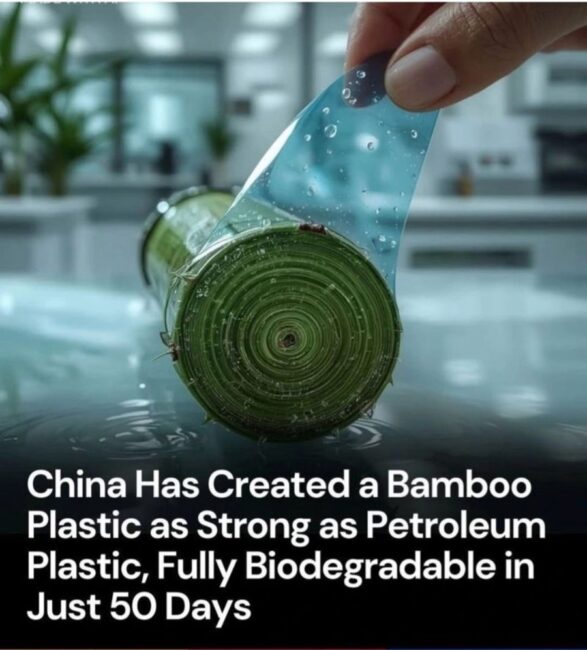


Plastic pollution has long been one of the planet’s toughest challenges, with petroleum-based plastics lingering for centuries in landfills and oceans. But a groundbreaking innovation from China is offering a game-changing solution: bamboo-based bioplastic.
Developed by researchers from Northeast Forestry University and Shenyang University of Chemical Technology, this new material is made from bamboo cellulose and engineered to be as strong as conventional plastic, while remaining fully biodegradable in just 50 days. Unlike petroleum plastics, it breaks down naturally in soil, leaving no toxic residues behind.
What makes it even more remarkable is its recyclability. The plastic retains up to 90% of its original strength after recycling, making it suitable for applications ranging from packaging to automotive components and household products. The production process avoids harmful chemicals, highlighting a more sustainable approach to materials manufacturing.
Bamboo, with its fast growth rate and abundance, provides a renewable feedstock that could reduce reliance on fossil fuels and cut down plastic waste globally. While lab results are promising, scaling up production and testing the material in diverse real-world conditions will be crucial steps toward a truly circular economy.
This innovation demonstrates the power of combining nature, technology, and sustainability, offering hope for a future where plastic doesn’t cost the planet.


