


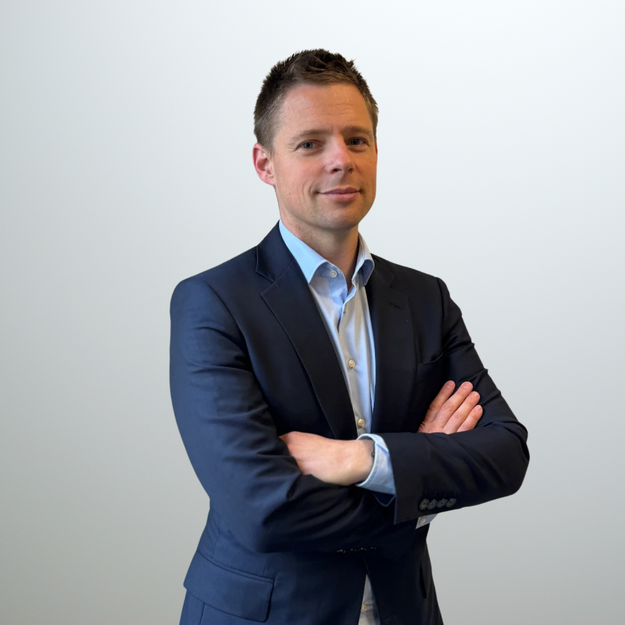


Fabrice Shoshany – CEO – Netexial
My view is that professional textile care needs to explain much more clearly what customers are actually buying. In textile rental, the value is not only the washing process. It is the complete management of textiles, resources, standards, logistics and service. That broader value proposition will become even more important as customers demand transparency, sustainability and flexibility.
At Netexial, our main focus is workwear rental, and I see customers increasingly asking to understand what they pay for. They want more flexibility in fabrics and garments, advice on the correct standards and credible ESG performance: lower CO2 emissions, less plastic and responsible end-of-life solutions for textiles.
For me, success depends on choosing the right partners, investing in technology, engaging employees and retaining customers. Our ambition is to expand rental by attracting organizations that still manage textiles internally and to support customers across Western Europe through partnerships and acquisitions.
Sustainability is already at the core of the rental model. Reuse and extended textile life have been part of professional textile services for more than a century. But we need to keep reducing our impact on natural resources. I see the future moving toward closed-loop water systems, decarbonized energy and cradle-to-cradle approaches.
This environmental performance is important for existing customers, but I also see it as a way to reach companies that have not yet outsourced their textiles. We need to explain our model better. Professional textile rental can provide resource efficiency, professional maintenance and lifecycle management in a way that fragmented in-house washing often cannot.
Data will become a major part of the service. It can improve the customer experience and optimize our own processes. Robotics will have a significant impact on production, and AI can support decision-making if companies first learn to manage their data properly. I also see chemical recycling and other circular technologies potentially strengthening the rental model.
Innovation should start with real customer needs. We use customer focus groups to understand frustrations and expectations, and we meet startups and potential suppliers from outside our traditional industry. I believe the sector sometimes innovates too slowly, especially compared with garment distributors, so we need to expose ourselves to ideas from other markets.
Labour remains a major constraint, particularly for maintenance, and our industry sometimes moves too slowly compared with garment distributors. Regulation is another important issue. Policymakers do not always understand PTC or the rental model, and poorly designed rules, including multiple EPR schemes, can create unintended consequences. That is why our industry needs a stronger voice.
Smaller companies will still have opportunities because service remains central to PTC. Agile players can serve specialized needs that large organizations may not address effectively.
We can also gain share from domestic or in-house washing by comparing total cost of ownership rather than cleaning price alone. Water, energy, labour, textile management, replacement, logistics and compliance all belong in the calculation. As resources become scarcer, professional services may become increasingly attractive compared with home washing or single-use alternatives.
Resource scarcity may also strengthen professional textile services compared with home washing and single-use alternatives. My long-term vision is a full circular model. To reach it, we need innovation, better communication and stronger cooperation across the value chain. My key message is: let us innovate, together where useful and independently where necessary, to attract new customers and employees to a circular textile service model.


