


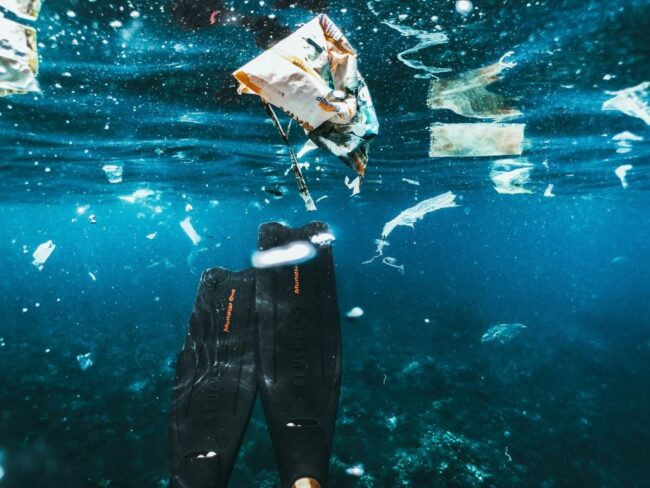
At the James Cook University in Australia researchers have achieved a significant breakthrough that allows them to transform microplastics into a highly valuable material. According to JCU Professor Mohan Jacob, it is commonly known that microplastics are notorious for their non-degradable and insoluble nature in water and that they are a growing threat to fish and animals and humans.
According to JCU’s Dr Adeel Zafar, microplastics’ characteristics enable them to absorb organic pollutants. Dr Zafar: “Once they are in water they are ultimately integrated into both marine and human food chains.” He also said that the recycling of microplastics faces serious challenges due to labour-intensive separation processes and high costs, resulting in very low resource recovery in general.
The JCU team pulverized plastic bottles into microplastics and then used the new ‘Atmospheric Pressure Microwave Plasma’ synthesis technique to convert the debris to graphene – a one atom thick carbon material that is harder than diamond, 200 times stronger than steel and five times lighter than aluminium, which is widely used in several industries. Dr Zafar stated that the research signifies a breakthrough in the field. The graphene produced could be used for several applications including the manufacturing of various sensors and water purification, including the absorption of PFAS.
Major Milestones in fight against microplastics
← Go Back


