




Background
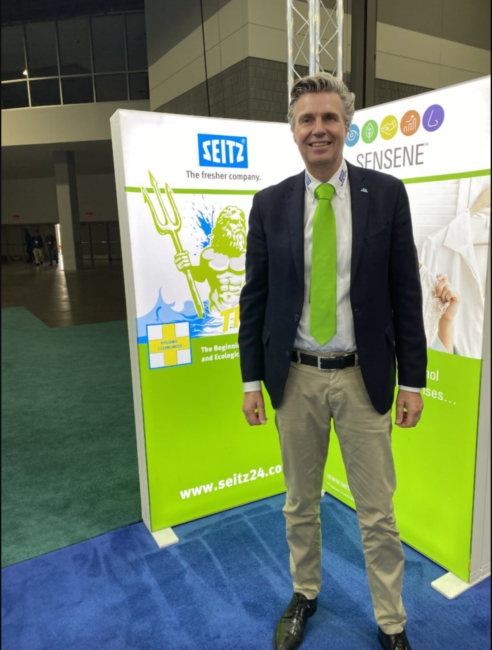
The SEITZ company was founded in Germany in 1885 and has developed an outstanding name in the international field of professional cleaning and care. Based on his expertise, its owner Alexander Seitz has been a partner of CINET for some years now.
Change? Information gathering essential!
Alexander: “Although our company experienced considerable growth in Germany last year – especially on the laundry side – I see that the first months of this year have been stable. And I have a feeling that this is happening in all markets. Companies are adapting to what is changing and the necessary transitions. The most important thing is to identify the changes – such as in customer behaviour or technology correctly – gather and highlight them and see them in a global perspective. Information gathering is essential here. Central points – such as the Associations – are very important to facilitate fact-finding: getting together, gaining information, finding out what’s been successful already and what hasn’t worked! Change is good, but it needs to be managed!”
How to attract younger generations
Alexander: “Our industry has a rather traditional way of thinking and to find access to a younger generation market is something we must get adapted to. Young people want to see that things are happening, then communicate, demonstrate and want to be proud of achievements. By communicating the interesting parts of our business – the challenging diversity, the fulfilling work and the on-going digitalization – we can make our industry ‘trendy’! Besides, if you care for the environment, you should be in this business, because we perform two tasks here: we keep garments in place and we do that in a professional, environmentally friendly way. As to being customers, I don’t believe that younger people are against the cleaning of clothes, but they aren’t sure what can be expected or how it can be convenient. So, reaching out and giving them the right kind of information is one part for a successful involvement.”
Difficult times …
Alexander: “There’s no general fit or solution for difficult times; it often is country-specific whether you can be successful to adapt to new ways of doing business. Each market has its own strengths and its own operating circumstances. For instance, in some countries you can’t find drivers for busses, let alone for laundry vans. Providing different services to customers will be difficult then. Generally I think globally centralization is coming back into our industry and more CPU’s (Centred Processing Units) will emerge. Not only because of staff shortages, but also because you need to have a certain productivity to get the cost back and achieve economies of scale.”

Suppliers’ roles
Alexander: “There are two major vital things to do: know what your customers want – both existing customers and newbies – and then adapt to their needs. Therefore, digitalization is the basis of plant optimization and a marketing approach to have people being aware of and wanting your services. Some suppliers have already developed marketing concepts that enable focusing on customer needs, but also training facilities – both offline and online – to focus on service improvement. That’s also part of our role. Supplying products is only one part of the business. The more automatization is being done, the more service and maintenance needs to be done. As a supplier you need to have that kind of service-level in your company to be able to offer it to customers!”
Boosting up-coming countries
Alexander: “Facilitating offline and online training opportunities is the main thing associations and suppliers can do to support these countries. Not only to avoid them making the mistakes we have made in the past, but also to provide a positive outlook for the future. People should see their work as a profession, have careers, make money out of it and feed their families. Not only as entrepreneurs, but also as an employee. People can be and get proud of what they do and understand that professional textile care is a service industry that is absolutely essential for our world.”
Benefits from World Congress & Best Practices Awards
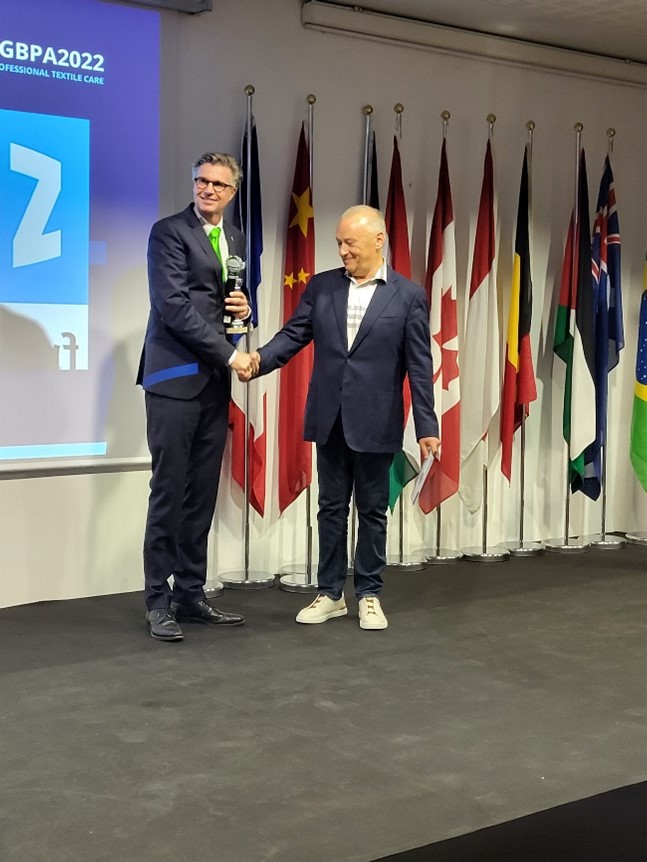
Alexander: “The minute you start your entry for the competition, you raise your awareness and you really become committed to getting better. You basically describe everything you do in your business and by doing so you may realize that some things are not working right, or some improvements can be made. That level of thinking process is so valuable … everybody should participate. It’s competing with the best practice people, and you get the whole company engaged. It’s not just about the manager who writes the presentation… the whole company will become the winner!”
How to reach even more people and awareness?
Alexander: “Creating awareness for GBPA remains the most important thing. Also amongst the once with a legacy involvement in the industry, as they might not feel such a necessity. Getting them involved too means looking at the future. So, all associations should be working on penetrating into all target groups and make them realize that we could all benefit!”


