





Best Practices Awards 2018 in Milan; “…..and the Winner of the CINET Innovation Award 2018 is ….. Dobbi from the Netherlands…”. This experience is still used by Dobbi in their Sales Presentations. It marked the starting point of their business development. At the time Dobbi NL introduced a fully NEW concept of textile service by cooperating with PostNL, a nationwide logistics specialist in the Netherlands. The start-up Dobbi initiated a pilot with PostNL, supported by Henkel. Step by step they started to run a nationwide online service of modern textile cleaning in NL, supported by advanced software and IT and by cooperating with esteemed drycleaners in the country. A true unprecedented innovation with ambitious targets. How does this look now, five years after this wonderful kick-off? Did it become successful and what is Dobbi’s vision for the future? An interview with Mr. Maurits Tiethoff, Managing Director of Dobbi NL.
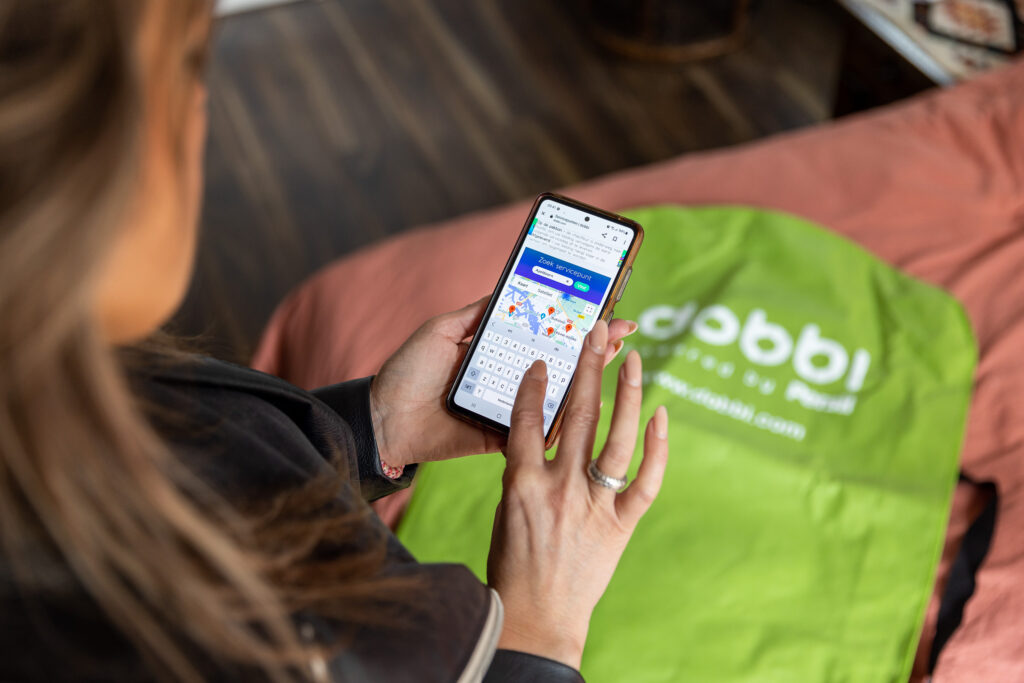
ONLINE-OFFLINE
The idea was really to set up an ON-DEMAND business. Did it develop like that?
Tiethoff: “Though the start of Dobbi was carefully prepared, to start an ambitious concept such as this was indeed an exciting new dimension of textile cleaning business. From the start Logistics was key. To reach out to customers in large, dense populated areas, such as the city of Amsterdam, is one thing, but to focus on less dense populated regions is completely different. Not only because of the distances of their homes, but certainly also because of their living habits. These customers are simply not yet focused on getting their laundry picked up at the door. So the concept we launched was very successful in dense populated living areas, but not so much in the countryside.”
So, Dobbi realized that such a thing would take more time for customers to adopt. The originally planned countrywide, intense communication effort, appeared not to be convertible. What could be the solution to that? Tiethoff: “ We adapted the business model to more cooperation with regional partners in textile cleaning and retail businesses, such as food chains and fashion brands. At the same time we kept focused strongly on organizing professional textile services to the highest standards on a national scale(2019). This transition appeared to be a very successful choice. The turn-over accelerated and the business concept could be explored to the maximum of effectivity. The IT was not only designed for a good service to consumers, but also to process the cleaning orders of business partners. This in total created a strong competitive advantage because of a high density in the logistic flows.”

Logistic Specialist
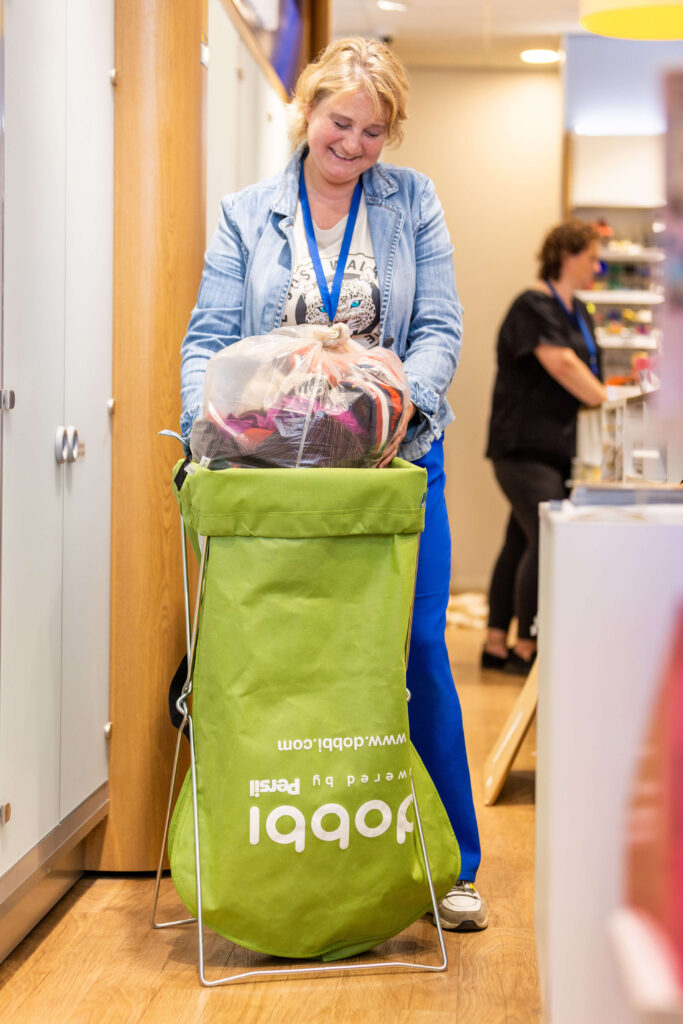
Today, Dobbi indeed is the national logistics specialist with over 1.750 service points, as foreseen at the pilot phase in 2018. Approximately 70% of their business is via partners and the rest is initiated by online ordering by individual customers. Is this possible in small scale operations who usually are not equipped to do this in just one premises?
Tiethoff: “The software and IT is supporting both routings exceptionally good. It provides a national logistic service at reasonable cost and prices also at less dense populated area’s to small sized customers (last mile). Important aspect here is the quality of the service. Customer complaints are to be avoided and the IT system is designed so that the Dobbi service managers can also deal with that effectively. An excellent cooperation in high quality services of professional textile cleaners though, is required. This is an important aspect of the business and requiring training of all involved on a continuous basis. Also in modern PTC skilled employees are the backbone of the organisation.”
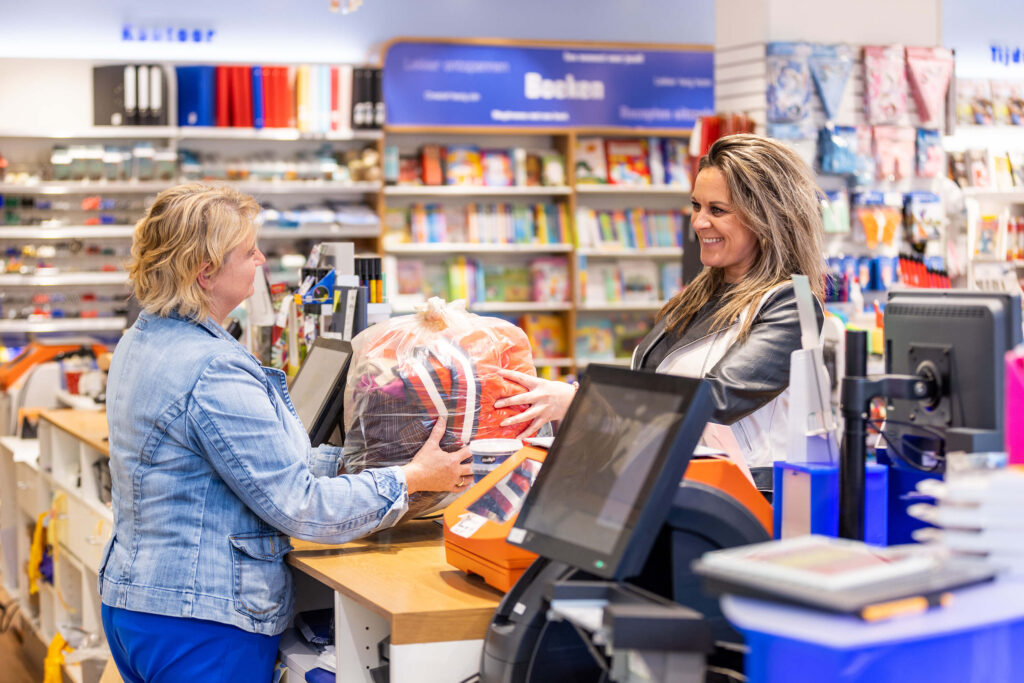
Advanced IT for reliable processing
Meanwhile DOBBI successfully expanded their services to the BtoB market for textile cleaning. This increases the density of the logistic network further. The garments and textiles packages processed
are diverse. Quite a challenge. Tiethoff: “The arrangements with the partners and sophisticated software allow a reliable processing and high quality service to customers, BtoB and BtoC alike. This creates an excellent starting point for further business development into new areas and partners. The advanced logistics will still be the key driver for business development”, Tiethoff states and adds: “Industrial Textile Services in the Netherlands, as also in other countries in Europe, operate dense networks with intense logistics in big volumes. To service smaller sized customers in the countryside or in cities, where big trucks are not allowed anymore, is more and more a challenge. Dobbi, based upon the partnership with PostNL, is specialist in this type of logistics. Dobbi is an attractive partner for retail business partners and industrial services companies, who require micro- logistic solutions.
Sustainable Circularity
Market demands for sustainability and circularity are providing new opportunities for the Dobbi concept. The sustainability of professional textile services is already proven to be extremely high. Once adopting Best Practices in processing , 3 – 5 times better than domestic cleaning. But the perspective of an increased lifetime of using garments and textiles longer, is even more attractive. A 50% improvement of CO2 savings is feasible for some garments. What can be of value of this for the PTC sector?
Tiethoff: “As a logistics specialist Dobbi is capable of collecting waste textile streams effectively and partner up with textile waste specialists to increase the percentage of 2 nd lifetime usage of garments (REDUCE) and to use the garments longer (RE-USE). Here we see good opportunities for professional textile care. The key-strategies to increase the sustainability, life time and re-use of garments. A huge potential for new services.”
So what’s the future perspective of Dobbi?
“The future perspective of Dobbi is bright and we decided to focus also on the European market for the years to come. The logistic excellence is creating very attractive new opportunities. Some require time, such as the change of consumer habits in countryside circumstances to order online, but for instance also the cooperation with waste stream companies”, Tiethoff points out. And he finalizes: “Some of these opportunities are really taking off now already, such as the partnering with industrial textile service companies and fashion brands for servicing smaller sized customers with micro- logistic solutions. Overall, the market for professional services is there, the necessary technology is available, it is really up to us, as an industry, to develop our services and adapt to fast changing markets.”


