


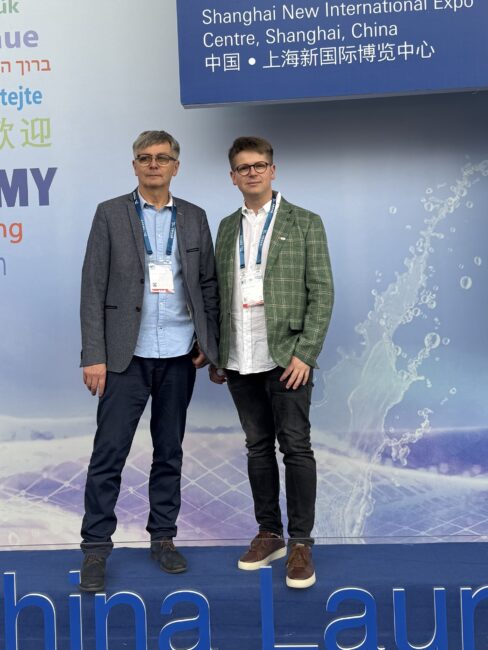


Krystian Wielgus – Co-Owner – G.K. Wielgus Industrial Laundry
“When we started our industrial laundry operations in 2014, we built the business from the ground up. In our first full year, we processed approximately 40–50 tonnes of textiles. Today, we process a similar volume in a single week, while still having significant unused production capacity. This journey has taught me that growth does not come from one investment, but from consistently building the whole system: technology, processes, people, logistics and customer relationships.”
My view of the future industrial laundry is not centred on one machine. Technology, people, textiles, logistics, energy and customer relationships have to work as one integrated system. That is the direction we are taking at G.K. Wielgus in Poland, where we process and rent bed linen, towels and table linen for hotels and restaurants.
One of the most important lessons I have learned is to look beyond the local market. By visiting laundries in Poland, Germany, the Netherlands, Belgium and China, I saw that growth is not created by buying isolated pieces of equipment. It comes from standardization, process design and a clear long-term direction.
Customers are asking for lower prices while also expecting punctuality, consistency and better quality. That combination creates pressure throughout the operation. Textile quality is a particularly important issue. If hotels buy items only on initial price and those textiles are not durable or suitable for industrial processing, productivity and automation become much more difficult.
This is why I see rental as an important part of our future. When the laundry owns the linen, we can control textile quality, maintain proper stock levels, create buffers and plan production, transport and energy use more effectively. Our objective is to increase rental from roughly 30–35 percent of volume toward 70–80 percent and reach about 250 tonnes per month while operating five days a week, mainly on one shift. The aim is growth without losing the ability to manage the business responsibly as a family company.
Automation will support that model. I expect robotics to expand in soiled-linen sorting, towel folding and order preparation. RFID already allows customers to see quantities, stock, wash cycles and the history of individual items. Machine vision can help detect stains and damage, while AI may support route planning, deliveries and production scheduling.
I do not expect people to disappear from laundries. Unusual items, process control and decision-making will continue to require human judgment. Training and clear work organization remain as important as machinery. The goal is not automation for its own sake; the goal is a plant that works reliably without requiring the owners to be present every minute.
Energy and water will become strategic issues. We already use a 20 m³ hot-water buffer and cogeneration to strengthen operational resilience, and we plan further heat recovery, condensate reuse and water recovery. We also intend to combine additional steam-generation solutions with photovoltaics and cogeneration as we continue reducing resource demand. In my view, efficiency, sustainability and reliability often support one another. Lower resource use can improve environmental performance and profitability at the same time.
I also believe medium-sized companies can compete successfully with much larger groups. Several customers have chosen us because they value direct contact, reliability and peace of mind. Scale matters, but service quality and fast decisions matter too.
Looking further ahead, I see opportunities in rental, outsourcing by smaller hotels, self-service laundry, consumer pickup and delivery, workwear and specialized services. Rising labour costs will encourage more outsourcing.
My vision is of a more automated, data-driven and resilient laundry industry. Rental and textile standardization will provide the basis for automation, while RFID will support full lifecycle management. My key message is to plan several years ahead and decide honestly where you want your company to be. Technology, people, standardization, logistics and customer relationships form one system, and investments should follow one coherent strategy.


